Description
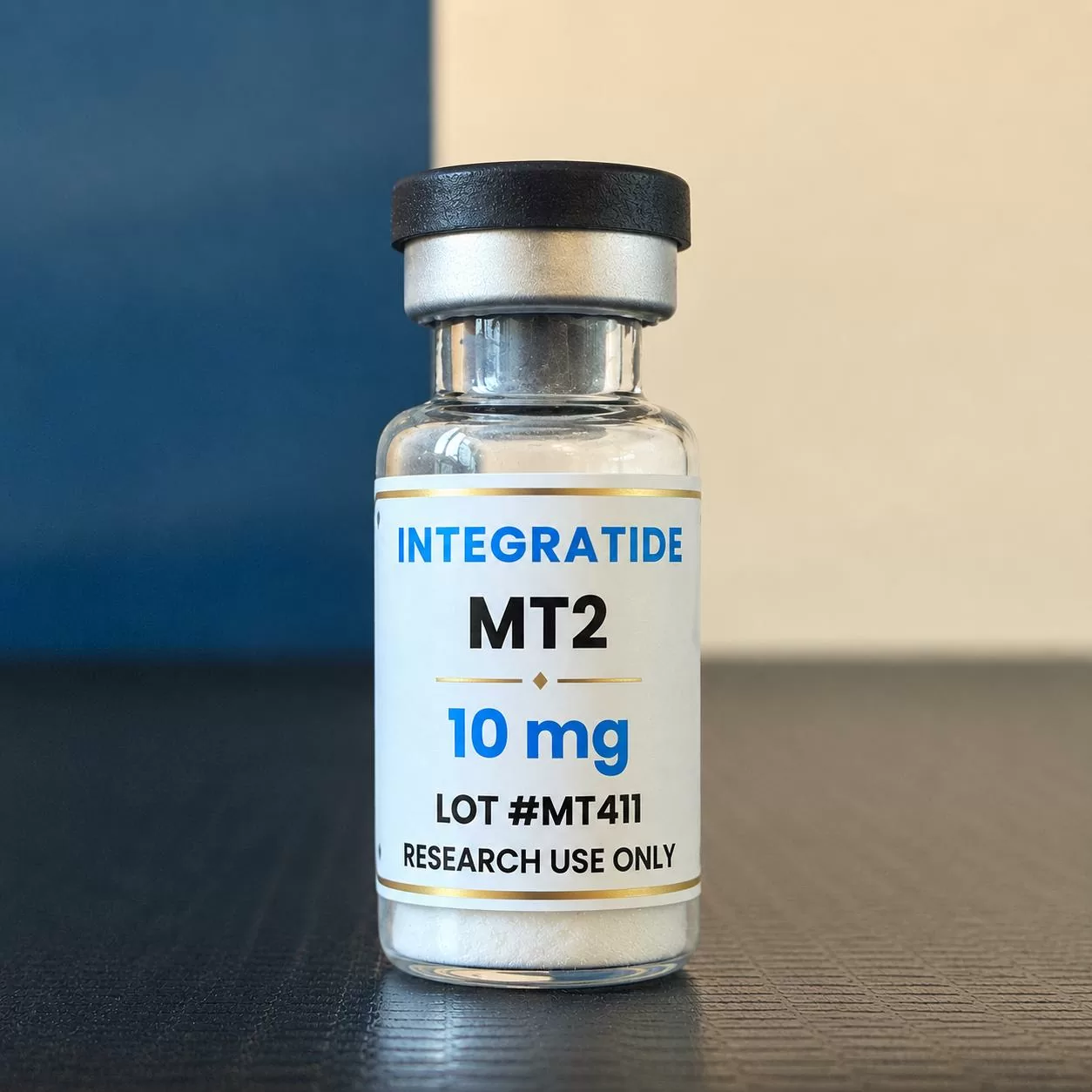
Melanotan II (MT2) is a synthetic, cyclic analog of alpha-melanocyte-stimulating hormone (α-MSH). A lactam bridge between its aspartate and lysine side chains locks the peptide into a rigid ring, making it a superpotent, long-acting melanocortin-receptor agonist and a widely used reference compound in pigmentation and melanocortin-pharmacology research.
Melanotan II Specifications
- Classification: Synthetic cyclic lactam heptapeptide; non-selective melanocortin-receptor (MC1R–MC5R) agonist
- Sequence: Ac-Nle-cyclo[Asp-His-D-Phe-Arg-Trp-Lys]-NH₂ (Nle⁴, D-Phe⁷, Asp–Lys lactam bridge)
- Molecular formula: C50H69N15O9
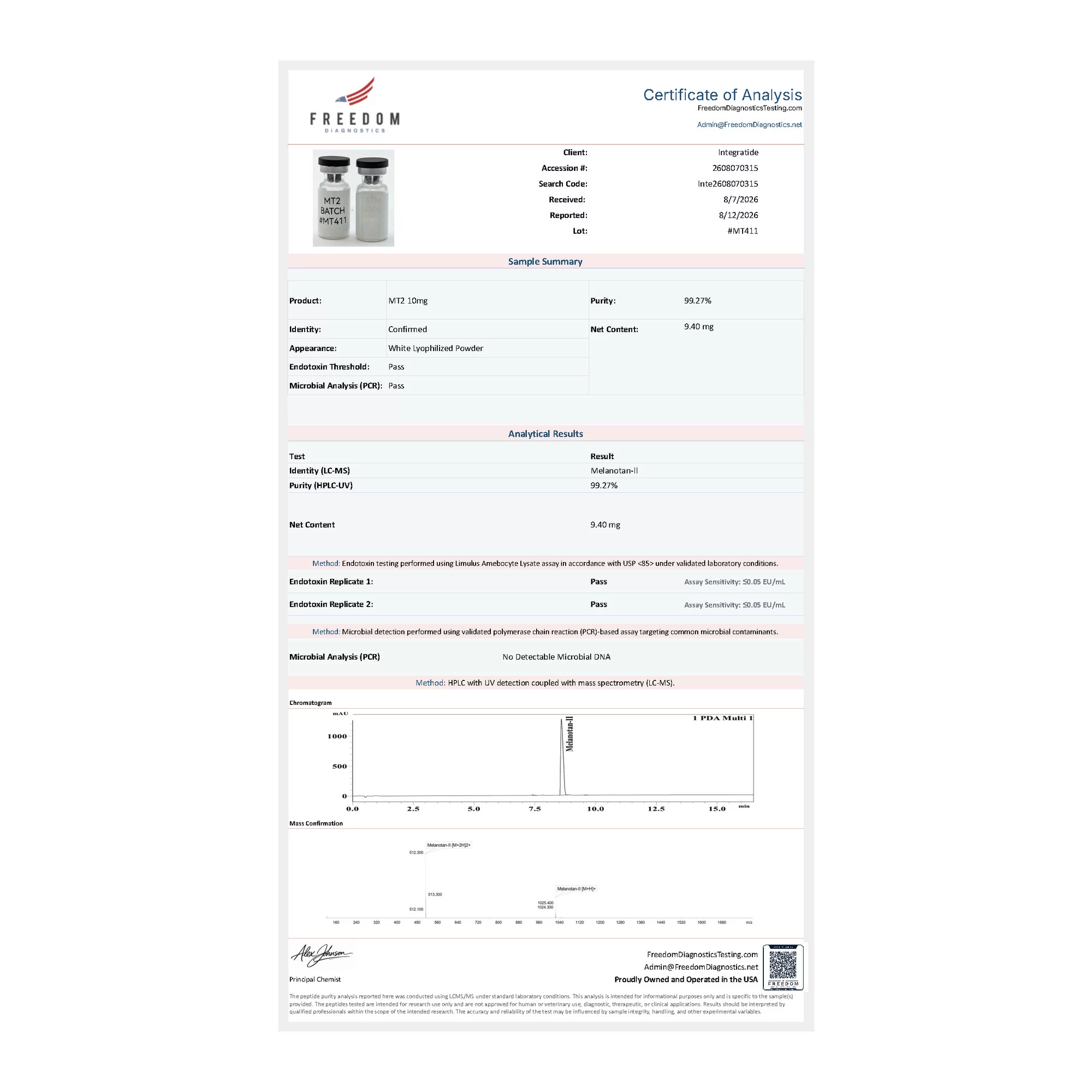
- Molecular weight: ~1024.2 g/mol (free base)
- CAS number: 121062-08-6
- Appearance: White to off-white lyophilized powder
- Solubility: Soluble in water and bacteriostatic water for reconstitution in the laboratory
- Storage: Store lyophilized at -20 °C, protected from light and moisture; avoid repeated freeze-thaw cycles
Research focus
Melanotan II is studied in melanocortin-receptor pharmacology (MC1R/MC3R/MC4R/MC5R binding and selectivity), pigmentation and melanogenesis models, energy-balance and feeding-behavior research via MC4R signaling, and melanocortin-pathway anti-inflammatory signaling. It also serves as the parent scaffold for the more receptor-selective analog PT-141 (bremelanotide).
Good to know
- The Nle⁴ substitution resists oxidation and D-Phe⁷ resists proteolysis, while the Asp–Lys lactam ring locks the pharmacophore — together giving MT2 far greater stability and potency than linear α-MSH.
- As a non-selective agonist it activates all four melanocortin receptor subtypes, which is why it is a common reference ligand in receptor-selectivity studies.
- Commonly supplied as the acetate salt; the salt form raises the practical molecular weight above the free-base value.
For laboratory research use only. Not for human or veterinary use.