Skip to content
10% off your first order  ·  Free shipping over $150  ·  Family-owned & lab-tested in the U.S.A.  ·  For laboratory research use only

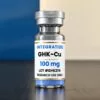
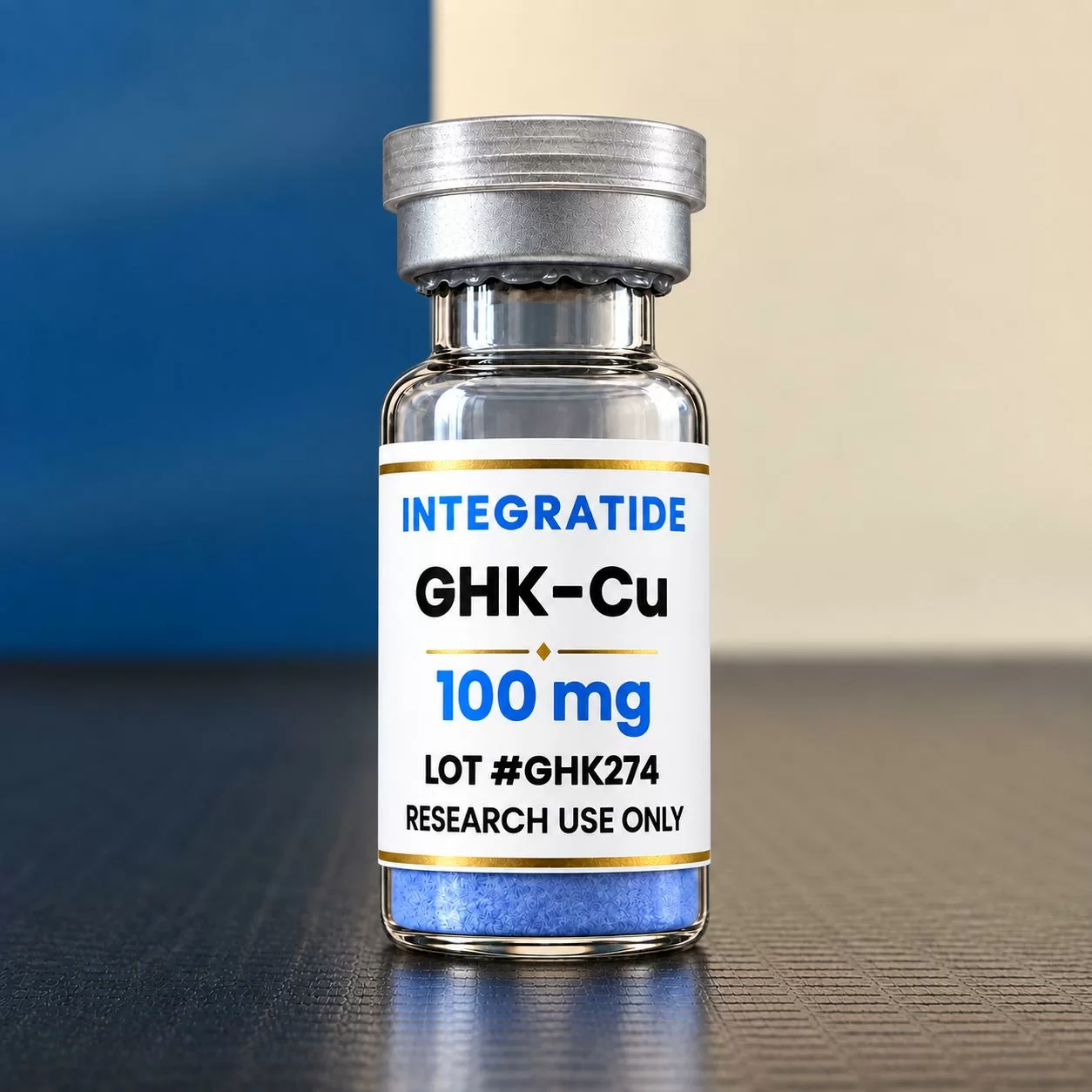
GHK-Cu

$40.00

A naturally occurring copper-binding tripeptide (glycyl-L-histidyl-L-lysine) valued in skin-biology and tissue-remodeling research for its role in the extracellular matrix.

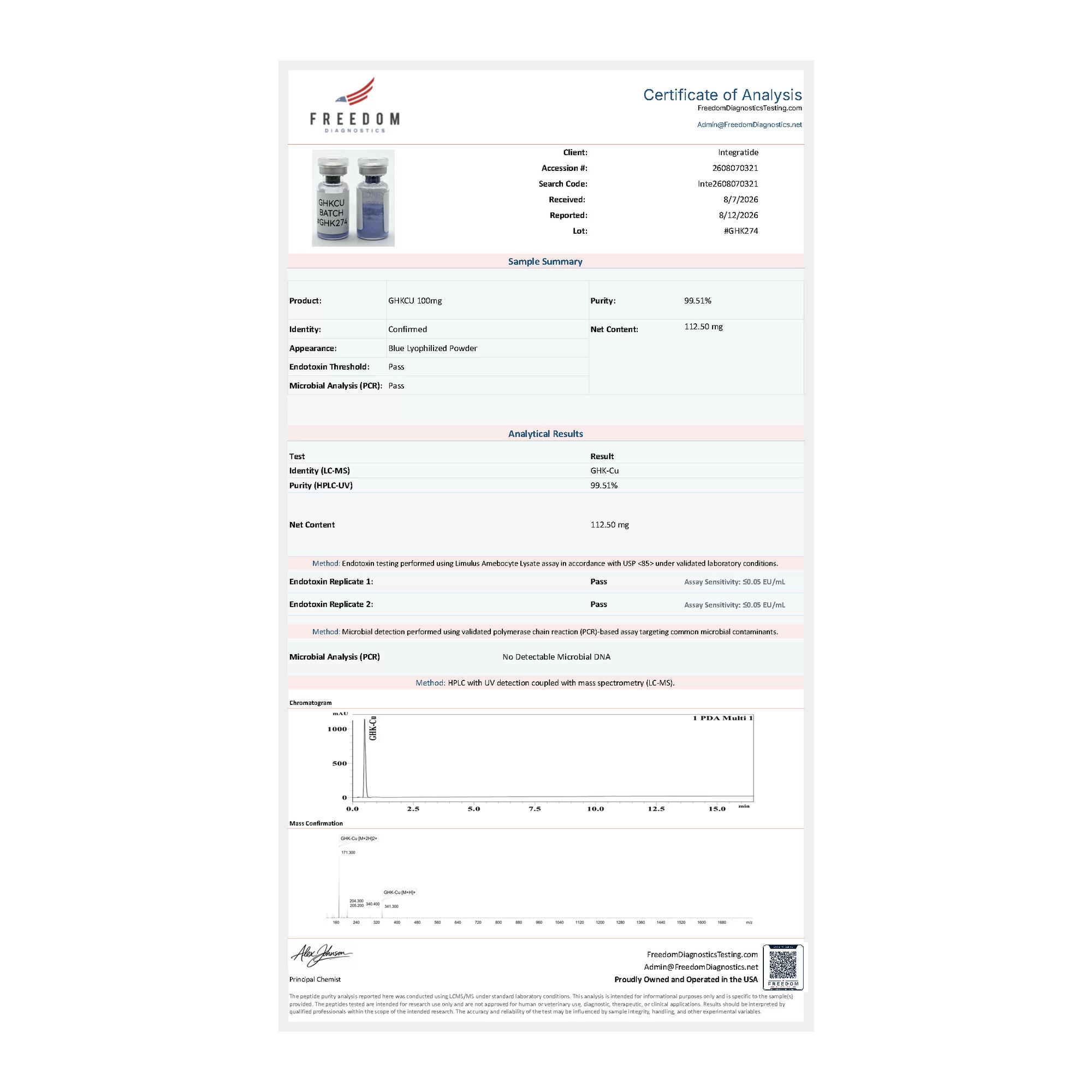
View this lot’s Certificate of Analysis (HPLC + MS) →Independently tested by Freedom Diagnostics (U.S.A.)

≥99% purity — tested per lot by Freedom Diagnostics
Ships in 1–2 business days — $10 flat, free over $150, plain tracked packaging
Wrong or damaged? We replace it or credit your wallet.
Secure checkout — pay withCredit / Debit CardCash AppVenmoZelleCrypto
Research use only
Supplied strictly for in-vitro laboratory research and development. Not for human or veterinary use. Not a drug, supplement, food, or cosmetic.

Description

GHK-Cu is the copper(II) complex of the tripeptide glycyl-L-histidyl-L-lysine (GHK) — a small, elegant molecule that occurs naturally in the body and carries copper in a stable, well-regulated form. First identified in human plasma in the 1970s, it has become one of the most widely studied peptides in skin-biology and extracellular-matrix research, valued for its rich, reproducible activity in cell and tissue models.

GHK-Cu Specifications

  • Classification: Copper(II)-binding tripeptide complex (a naturally occurring matrikine)
  • Sequence: Gly-His-Lys (glycyl-L-histidyl-L-lysine) · Cu2+
  • Molecular formula: C14H22CuN6O4
  • Molecular weight: ~401.9 g/mol
  • CAS number: 89030-95-5
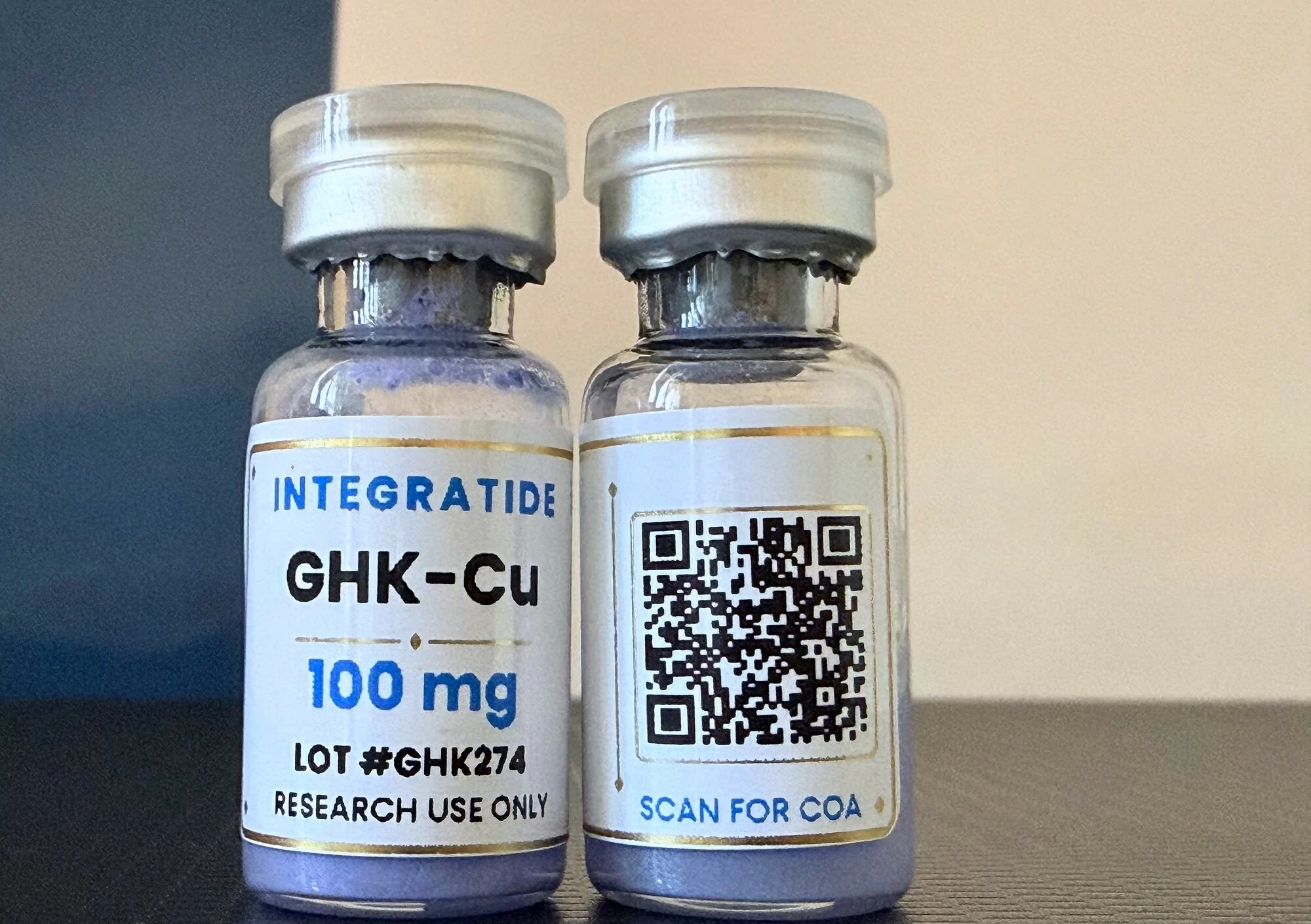
  • Appearance: Lyophilized blue to blue-violet powder (the color reflects the copper complex)
  • Solubility: Readily soluble in water; saline is typically avoided so chloride does not displace the copper
  • Storage: Store lyophilized at -20 °C, protected from light

Research focus

GHK-Cu is studied across skin and extracellular-matrix biology, collagen and glycosaminoglycan synthesis, angiogenesis models, antioxidant and tissue-remodeling signaling, and copper-transport biochemistry.

Good to know

  • First isolated from human plasma by biochemist Loren Pickart in 1973, during research into why young plasma kept cells behaving “younger.”
  • Occurs naturally in plasma, saliva, and urine, and is classified as a matrikine — a signaling fragment derived from the extracellular matrix.
  • Its high affinity for copper(II) lets it carry the metal in a modulated, less-reactive form — and gives the complex its signature blue color.

For laboratory reconstitution, pair with our bacteriostatic water.
Certificate of Analysis

Lot GHK274
Purity (HPLC)99.51%
Identity (MS)Confirmed
EndotoxinPass (≤0.05 EU/mL)
Tested12 Aug 2026

This certificate is served directly from the laboratory’s own domain coas.freedomdiagnosticstesting.com — not from our server.

Search codeInte2608070321
Verify this result at the lab →

Paste the search code into Freedom Diagnostics’ own lookup to confirm these results at the source.

Net content112.50 mg
AppearanceBlue Lyophilized Powder
Microbial (PCR)No Detectable Microbial DNA

Testing is carried out independently by Freedom Diagnostics, a U.S. analytical laboratory. Every certificate is published in full — never behind a request form.

Common questions

How do payments work?

We accept credit and debit cards (you’re securely redirected to complete payment), plus Cash App, Venmo, Zelle, and crypto. Pick your method at checkout and follow the on-screen steps — card payments confirm instantly; app and crypto payments we confirm fast, usually within the hour, and your order moves straight to packing.

How quickly will my order ship?

Orders are dispatched within 1–2 business days in plain, unbranded packaging. Every parcel is tracked and the tracking number lands in your inbox. Shipping is free on orders over $150.

How do I verify this lot’s Certificate of Analysis?

Every lot is tested by HPLC and mass spec at Freedom Diagnostics (U.S.A.) and the certificate is published — never hidden behind a request form. Open the COA link above the price, or browse all certificates on our Certificates page, where we also explain how to verify a report with the lab directly.

How should vials be stored on arrival?

Keep lyophilized vials sealed in a cool, dry place away from light; refrigeration or freezing is standard laboratory practice for long-term storage. Handle all materials per good laboratory practice.

What if my order arrives wrong or damaged?

Email us with your order number and a photo — we replace the item or credit your wallet. Full details are on the Shipping & Returns page.

Who can purchase from Integratide?

Qualified researchers and institutions only. Everything we sell is strictly for in-vitro laboratory research — not for human or veterinary use of any kind — and checkout requires a 21+ research-use attestation.

0